

Navigating the 2026 Paradox: Growth Strategies for Uncertain Times
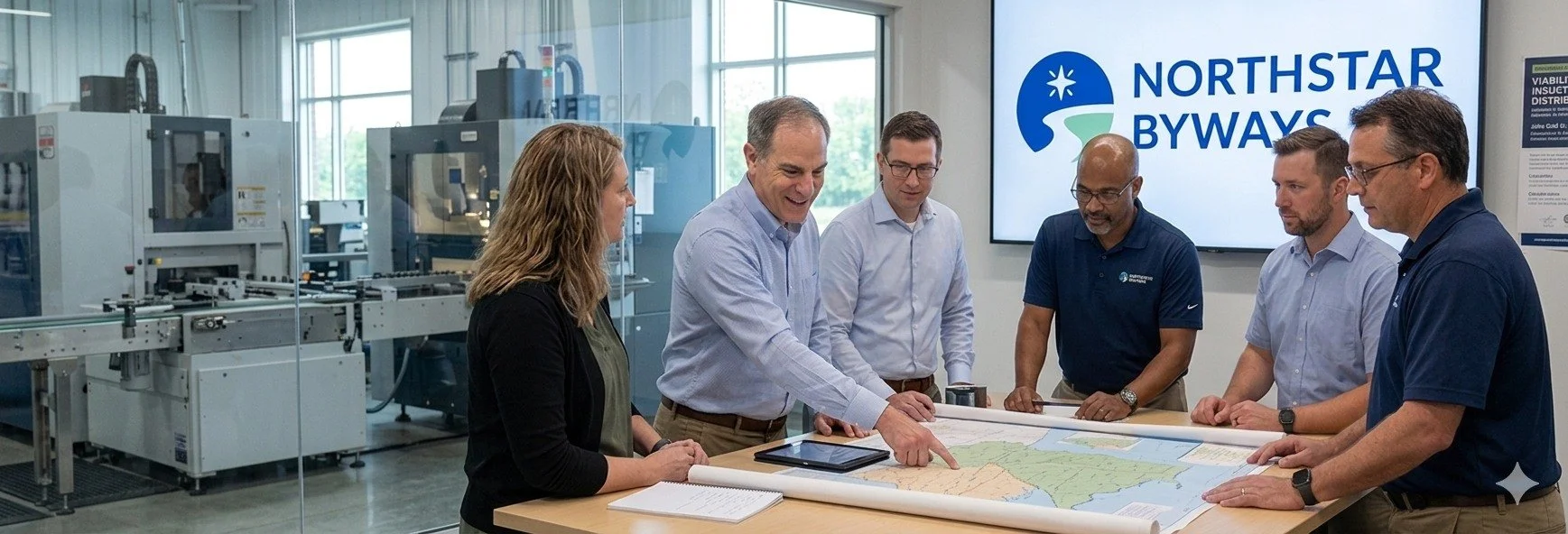
Managing a family-owned manufacturing business in the Upper Midwest has always required a distinct blend of grit and pragmatism. But in mid-2026, the economic dashboard is flashing a bizarre mix of signals.
On one hand, equity markets hover near record highs, domestic manufacturing PMI shows unexpected momentum, and unemployment remains low. On the other hand, a real-world energy shock has pushed headline inflation back up to 3.8%, putting immediate pressure on input costs, shipping, and margins.
For mid-sized and family-led operations, this environment creates a tricky paradox: How do you aggressively pursue organic growth while actively mitigating downside risk?
When visibility drops to just a couple of quarters, the old playbooks won't cut it. Navigating these choppy waters requires a shift from rigid long-term forecasting to a model of agile execution anchored by a clear long-term destination.
1. Tighten the Focus: Ruthless Prospect Winnowing
In a "low-hire, low-fire" labor market, your team’s capacity is your most precious asset. When uncertainty hits, the temptation is often to chase every single RFQ that comes across the desk just to keep the pipeline full. This is a trap.
Instead, leadership teams must establish stricter qualification criteria to focus engineering, sales, and operational talent on high-probability, high-margin opportunities.
The Action: Audit your current sales pipeline. Filter out the "window shoppers" and focus your finite resources on prospects that align perfectly with your core competencies and vertical expertise.
The Result: You preserve discretionary spending, reduce burn, and ensure your team is positioned to win the deals that actually move the needle.
2. Recalibrate Capital Investments (The 3-Year Hurdle)
With inflation elevated, the discount rates applied to long-term capital investments must be adjusted upward. Long-tail capital expenditures that take five to seven years to yield a return are incredibly risky when short-term cash flow is king.
| Investment Type | Current Strategy | Priority Level |
|---|---|---|
| Long-Tail Projects (5+ year ROI) |
Put on hold or break into smaller, modular phases. | Low |
| Strategic Automation (<3 year ROI) |
Fast-track to offset labor constraints and lower unit costs. | High |
| Debottlenecking Existing Lines | Low-cost optimizations that immediately boost throughput. | Critical |
The Rule of Thumb for 2026: Prioritize capital projects that pay for themselves in less than 3 years. If a machine or a software implementation can’t structurally improve cash flow or capacity within that window, it’s safer to keep the liquidity on your balance sheet.
3. Plan for Three Years, Execute for Two Quarters
Trying to predict where the macroeconomy will sit in 18 months is a guessing game right now. However, running a business without a long-term goal leads to aimless drifting. The solution is a dual-horizon framework.
The North Star vs. The Tactical Pivot
The Three-Year Vision: Maintain a firm destination for your market position, operational capabilities, and succession planning.
The Rolling Six-Month View: Accept that it is difficult to project beyond two quarters with absolute certainty. Limit your firm, unalterable commitments to a 180-day horizon.
To bridge this gap, implement a rigorous, data-driven quarterly review of your tactical decisions. Treat your operational plan as a living document. If the assumptions around energy costs, material pricing, or customer demand shift, your tactics must pivot immediately to protect the broader three-year strategy.
The Bottom Line
Surviving and thriving in this environment isn't about hiding from risk—it's about managing it with discipline. By winnowing your pipeline, tightening your CapEx hurdle rates, and executing in tight, 90-to-180-day tactical sprints, your family-owned business can navigate the uncertainties of 2026 without losing sight of long-term growth.
#Manufacturing #MidwestBusiness #FamilyBusiness #Strategy2026 #Operations
