

Navigating the 2026 Paradox: Growth Strategies for Uncertain Times
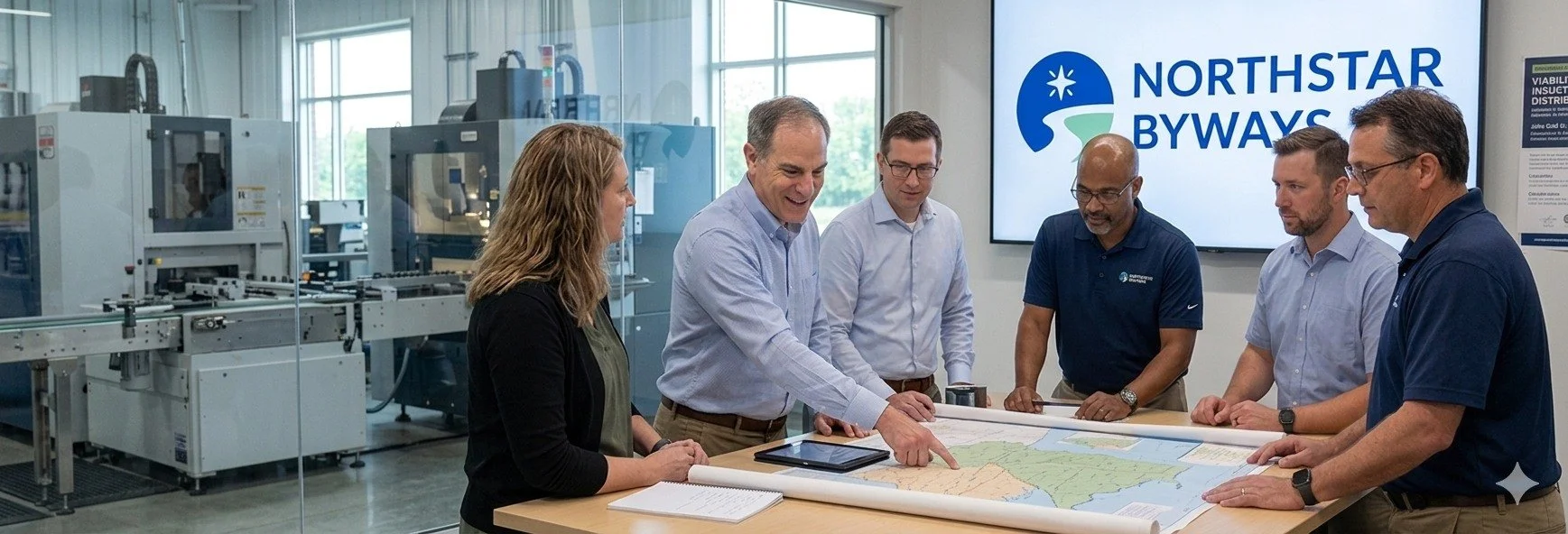
Managing a family-owned manufacturing business in the Upper Midwest has always required a distinct blend of grit and pragmatism. But in mid-2026, the economic dashboard is flashing a bizarre mix of signals.
On one hand, equity markets hover near record highs, domestic manufacturing PMI shows unexpected momentum, and unemployment remains low. On the other hand, a real-world energy shock has pushed headline inflation back up to 3.8%, putting immediate pressure on input costs, shipping, and margins.
For mid-sized and family-led operations, this environment creates a tricky paradox: How do you aggressively pursue organic growth while actively mitigating downside risk?
When visibility drops to just a couple of quarters, the old playbooks won't cut it. Navigating these choppy waters requires a shift from rigid long-term forecasting to a model of agile execution anchored by a clear long-term destination.
1. Tighten the Focus: Ruthless Prospect Winnowing
In a "low-hire, low-fire" labor market, your team’s capacity is your most precious asset. When uncertainty hits, the temptation is often to chase every single RFQ that comes across the desk just to keep the pipeline full. This is a trap.
Instead, leadership teams must establish stricter qualification criteria to focus engineering, sales, and operational talent on high-probability, high-margin opportunities.
The Action: Audit your current sales pipeline. Filter out the "window shoppers" and focus your finite resources on prospects that align perfectly with your core competencies and vertical expertise.
The Result: You preserve discretionary spending, reduce burn, and ensure your team is positioned to win the deals that actually move the needle.
2. Recalibrate Capital Investments (The 3-Year Hurdle)
With inflation elevated, the discount rates applied to long-term capital investments must be adjusted upward. Long-tail capital expenditures that take five to seven years to yield a return are incredibly risky when short-term cash flow is king.
| Investment Type | Current Strategy | Priority Level |
|---|---|---|
| Long-Tail Projects (5+ year ROI) |
Put on hold or break into smaller, modular phases. | Low |
| Strategic Automation (<3 year ROI) |
Fast-track to offset labor constraints and lower unit costs. | High |
| Debottlenecking Existing Lines | Low-cost optimizations that immediately boost throughput. | Critical |
The Rule of Thumb for 2026: Prioritize capital projects that pay for themselves in less than 3 years. If a machine or a software implementation can’t structurally improve cash flow or capacity within that window, it’s safer to keep the liquidity on your balance sheet.
3. Plan for Three Years, Execute for Two Quarters
Trying to predict where the macroeconomy will sit in 18 months is a guessing game right now. However, running a business without a long-term goal leads to aimless drifting. The solution is a dual-horizon framework.
The North Star vs. The Tactical Pivot
The Three-Year Vision: Maintain a firm destination for your market position, operational capabilities, and succession planning.
The Rolling Six-Month View: Accept that it is difficult to project beyond two quarters with absolute certainty. Limit your firm, unalterable commitments to a 180-day horizon.
To bridge this gap, implement a rigorous, data-driven quarterly review of your tactical decisions. Treat your operational plan as a living document. If the assumptions around energy costs, material pricing, or customer demand shift, your tactics must pivot immediately to protect the broader three-year strategy.
The Bottom Line
Surviving and thriving in this environment isn't about hiding from risk—it's about managing it with discipline. By winnowing your pipeline, tightening your CapEx hurdle rates, and executing in tight, 90-to-180-day tactical sprints, your family-owned business can navigate the uncertainties of 2026 without losing sight of long-term growth.
#Manufacturing #MidwestBusiness #FamilyBusiness #Strategy2026 #Operations

The Distributor Dilemma: Will They Actually Move Your Product?

For family-owned B2B manufacturers in the U.S., one of the most persistent challenges is ensuring products are readily available to customers nationwide without the massive overhead of "brick and mortar" captive warehouses.
This is where a full-line stocking distributor becomes a critical strategic partner. By offering regional stocking in lieu of your own employees and facilities, they provide the physical reach needed to compete. While the industrial distribution market has shifted dramatically over the last fifty years—with the top fifty firms now controlling more than two-thirds of the U.S. market—their core role remains vital.
However, modern distributors are more rigorous than ever. To remain competitive, they apply strict stocking metrics to ensure their suppliers provide sufficient inventory turns. Most distributors limit themselves to just one or two suppliers per category.
To earn your spot on their shelves, you must address three significant challenges.
1. The Differentiation Gap
How well can you articulate your point of difference in a sea of competitors? You must provide the distributor with total confidence that your product will move.
Ask yourself: What are the top 2–3 reasons customers choose you over the competition? Is it superior performance, reliability, specialized service, or total value? These reasons form the basis of your "case for stocking." If you can’t prove a unique compelling advantage to the distributor, they won't risk their shelf space on you.
2. The "Math of Viability"
Industrial distribution is a game of margins. To determine if this channel is viable, you must evaluate your gross margin beyond production costs. If your product category cannot sustain at least a 25% gross margin, selling through a stocking distributor is likely not sustainable long-term.
| Stakeholder | Minimum Margin Requirement | Purpose |
|---|---|---|
| Distributor | 15% | Covers financial risk, commissions, and stocking costs. |
| Manufacturer | 10% | Ensures net financial viability and reinvestment. |
| Total Threshold | 25% | The baseline for a sustainable partnership. |
3. The 60-Day Sales Cycle
This is perhaps the most overlooked factor: Is your product easy to sell downstream?
Distribution sales professionals typically manage more than ten different lines and often work on a commission-only basis. Naturally, they gravitate toward the "path of least resistance." They favor lines that:
Have a clear, powerful elevator pitch.
Require fewer than three sales calls to onboard a new account.
Generate revenue within 60 days.
By tailoring your messaging to support the sales rep, you increase your "mindshare" among their team. Furthermore, remember that reps loathe channel conflict. They favor manufacturers who support sustainable sales through distribution rather than those who compete with them by selling directly to the same customer base.
The Verdict
If your product can offer a compelling advantage, clear the 25% margin hurdle, and close in under 60 days, industrial distribution can be a lucrative, scalable channel for your business. If you are missing one of these three pillars, it may be time to audit your go-to-market strategy before committing to a distribution contract.
Has your firm struggled with "line neglect" from a large distributor? How did you pivot your strategy to get their attention back? Share your experience in the comments below.
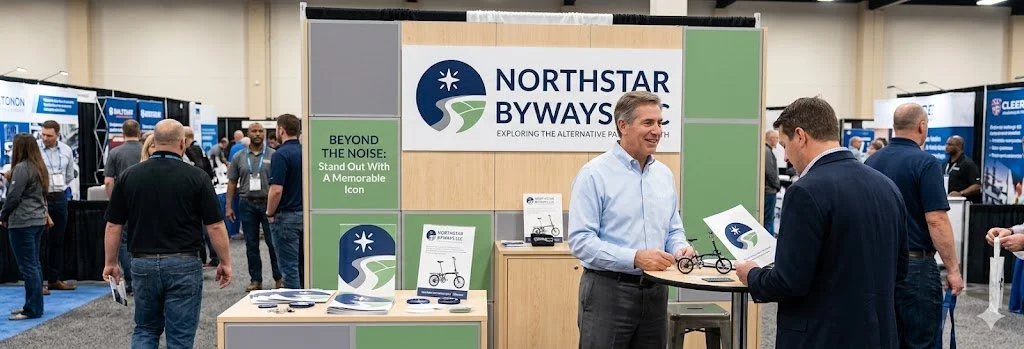
Beyond the 10x10: How Manufacturers Can Break Through the Trade Show Noise🚩
Northstar Byways trade show insights
Exhibiting costs for B2B manufacturers are skyrocketing. When you factor in staffing, travel, and booth design, the pressure to see a return on investment is high.
The good news? 80% of attendees have buying authority. The bad news? Most manufacturers get lost in the "sea of sameness."
If you want to break through the noise, stop thinking about gimmicks and start thinking about Unity of Message.
Here are three things to audit before your next show:
The 3-Second Rule: Can a passerby understand your core point of difference (Product, Service, or Support) in three seconds? If your wording isn't succinct, it’s invisible.
The Icon Factor: Does your company have a memorable symbol or "icon" that anchors your brand? A strong visual identity does the heavy lifting so your sales team doesn't have to.
The "Showbag" Test: Does your marketing collateral and giveaway actually reinforce your message? If your giveaway doesn't remind them of why you're different, it's just overhead.
I’ve led rebranding efforts where we shifted the focus to the company’s most memorable traits. The result? A significant lift in prospect engagement and a much clearer path to onboarding new customers.
At Northstar Byways, we help manufacturers audit their marketing channels to ensure their theme, message, and "icons" are aligned for growth. Are you ready to stand out from the pack? Let’s talk.
#Manufacturing #B2BMarketing #TradeShows #Branding #OrganicGrowth #NorthstarByways
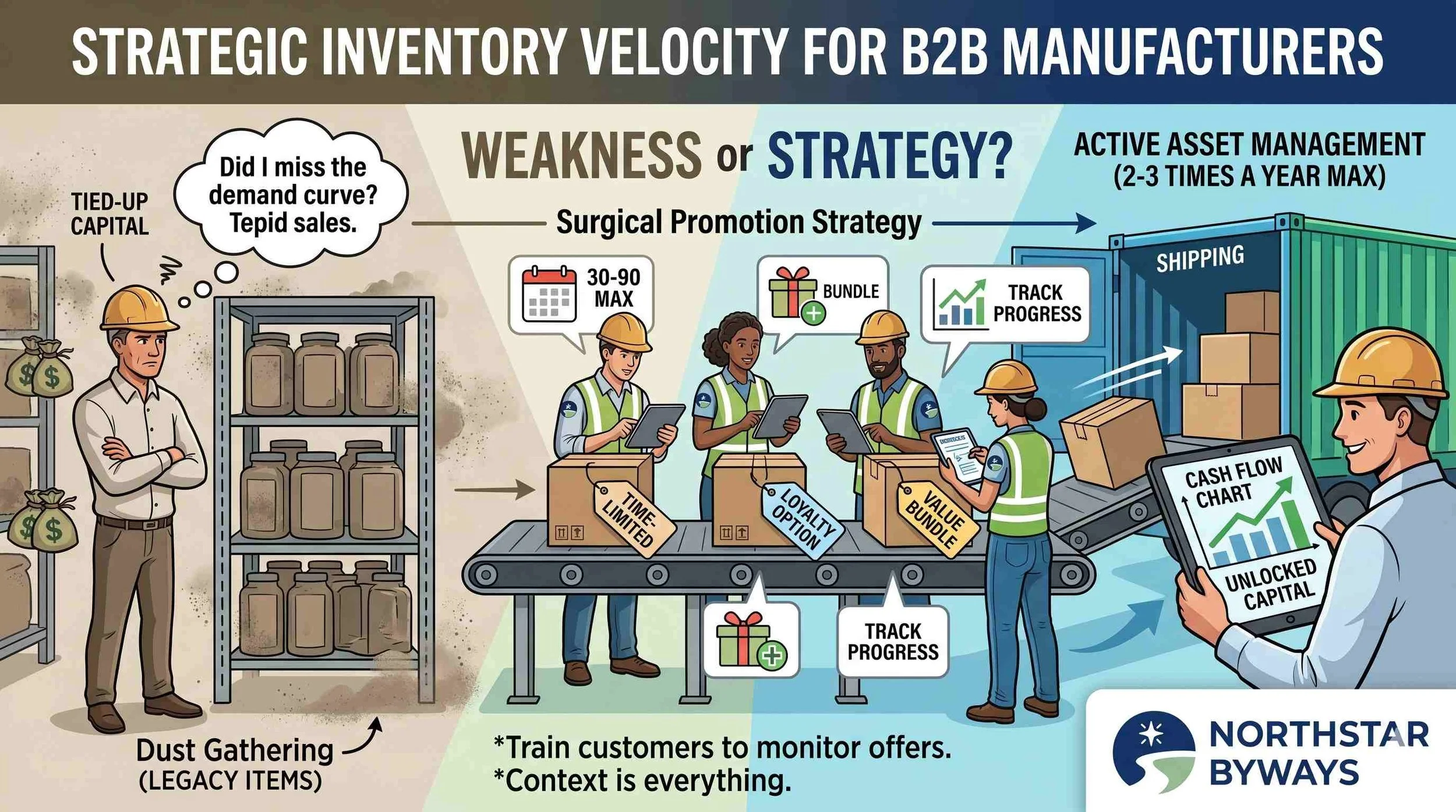
Is Your Warehouse Becoming a Museum?
Northstar Byways LLC Helps Midwestern Manufacturers Move Inventory Optimally With Strategically Timed Short Term Promotional Campaigns
We’ve all been there. You look at the racks and see what used to be your top-selling core products gathering dust. Sales have cooled, and that "problem solver" from two years ago is now just tied-up cash.
The question isn’t just "How do we move this?" It’s "How do we move this without breaking our brand promise?"
For a B2B manufacturer, a short-term price promotion is a surgical tool, not a sledgehammer. Here is how to use it effectively:
1. The "Why" Behind the Buy
Before you slash prices, ask: Did the market migrate, or is the product just aging? If the tech is obsolete, a discount won't save it. But if it’s just a demand curve dip, a promotion can be the "jolt" the market needs to re-engage with your brand.
2. Protect the Brand Promise
To avoid degrading your brand, context is everything. * Don’t just "discount": Position it as a "Product Line Refresh" or a "Seasonal Inventory Realignment."
Reward Loyalty: Offer the promotion to existing customers first. It frames the deal as a "thank you" for their business, rather than a fire sale.
3. Set Hard Boundaries
A promotion that never ends isn't a promotion—it’s your new (lower) price point.
The 90-Day Rule: Keep your window tight. Ideally, 30 days is the "sweet spot" for a call to action. 90 days is the absolute ceiling.
Scarcity is Key: Once the inventory is gone, the price goes back to the standard. This signals to competitors that you aren't "lowering the floor," you're simply managing assets.
4. Bundle for Value
Instead of a straight price cut, try bundling slow-moving inventory with high-demand accessories or service contracts. This moves the goods while keeping the "core" price of your primary product intact.
The Bottom Line
Offering a promotion 2–3 times a year max doesn't signal weakness; it signals active management. It trains your customers to keep an eye on your LinkedIn page and your website, keeping your brand "top of mind" when they are ready for their next major capital purchase.
Manufacturing leaders: How do you handle aging inventory without triggering a "race to the bottom" on price?
#Manufacturing #SupplyChain #B2BMarketing #StrategicGrowth #MidwestBusiness
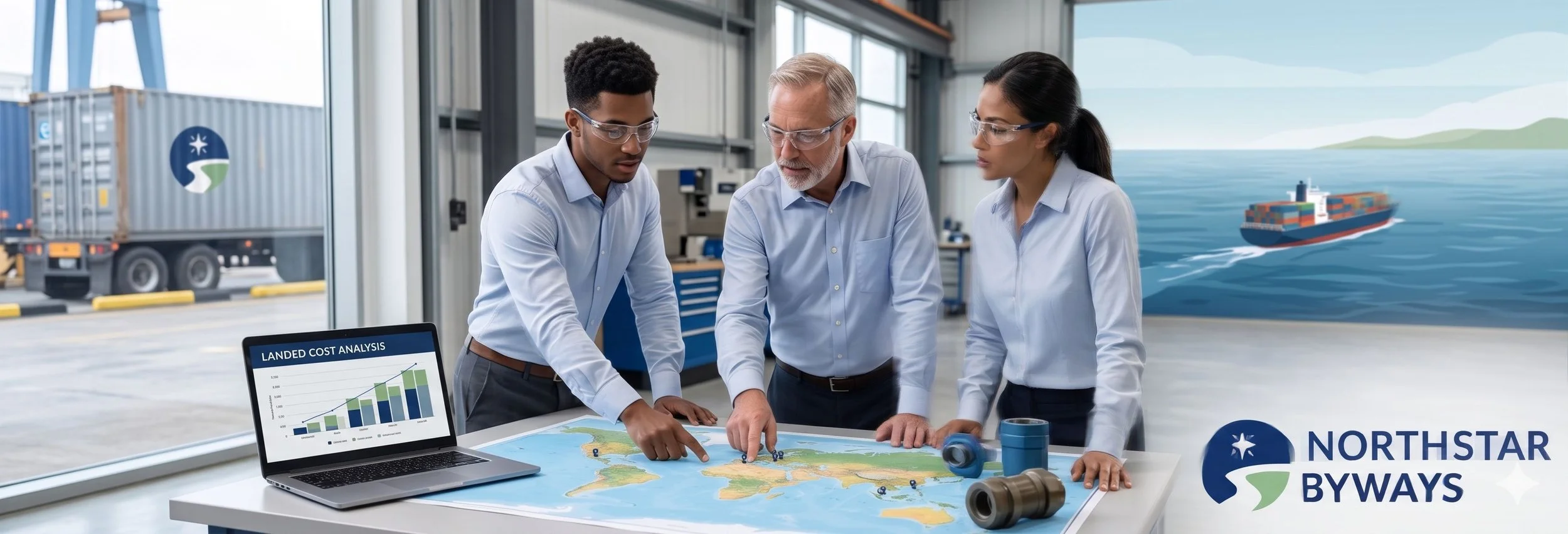
Rethinking Exports: Is Global Growth Still Worth the Headache?
Northstar Byways helps privately held manufacturers navigate the challenging conditions of exporting goods outside the US.
For a privately held manufacturer, the question used to be how to export. Today, the question is if you should bother.
With the average effective tariff rate hovering around 13% and export prices up nearly 6% over the last twelve months, the landscape has shifted. Owner-operators are now shouldering massive financial risks, often straining long-term relationships with international clients who are feeling the pinch of surcharges, customs fees, and VAT.
The bottom line is simple: Can a U.S. exporter still win against a regional competitor sitting right in the customer’s backyard?
The Three Filters for International Success
Before you double down on an international strategy in this environment, run your product through these three filters:
1. Is Your Product Truly Distinctive? In a high-tariff world, "good enough" won't cut it. Your product’s form or function must be unique enough that the customer is willing to pay a premium to cover the shipping and the trade duties. If they can find a local alternative that’s 80% as good for 30% less, you’re fighting a losing battle.
2. Are You Protecting the "Total Account" Value? Sometimes, an international shipment isn’t about the margin on that specific box—it’s about the domestic relationship. If a major U.S. account wants to consolidate its vendor list and buy from you globally, the international revenue is a defensive play. Consider "bundling" your pricing to protect the whole account from competitors trying to get a foot in the door at overseas branch locations.
3. Can You Lean on Your Big Customers? Many large multinationals have preferred customs clearance and freight contracts that a small manufacturer can’t touch. If you have a strong relationship, don't be afraid to ask them to help with the logistics. It’s a win-win: they get the parts they want, and you offload the clearance risk.
The Bottom Line
It is natural for an ambitious manufacturer to follow their customers across borders. But in 2026, you can’t rely on a "build it and they will come" e-commerce strategy for international sales. The costs are too high.
There needs to be a compelling reason for a customer to look past the tariffs. If that reason is rooted in a longstanding relationship and a rock-solid track record, pursuing international sales is still worth the risk. Just make sure you aren't just "buying" the revenue at the expense of your own sustainability.
Your 48-Hour Action Item: The Landed Cost Audit
Don’t wait for your quarterly financials to tell you if an international account is still profitable. This week, pick your top three international customers and run a "Total Landed Cost" audit:
Calculate the true "Duty-Paid" price: Layer in the current effective tariff rates, the latest fuel surcharges, and VAT.
Compare to the local alternative: If your price is now 20% higher than a competitor in their own backyard, call the customer.
Have the "Win-Win" conversation: Ask if you can leverage their corporate freight contracts or customs brokerage to lower the entry cost.
In this environment, "hoping for the best" isn't a strategy. Knowing your numbers—and being willing to walk away from a deal that no longer makes sense—is how you protect the long-term health of your firm.
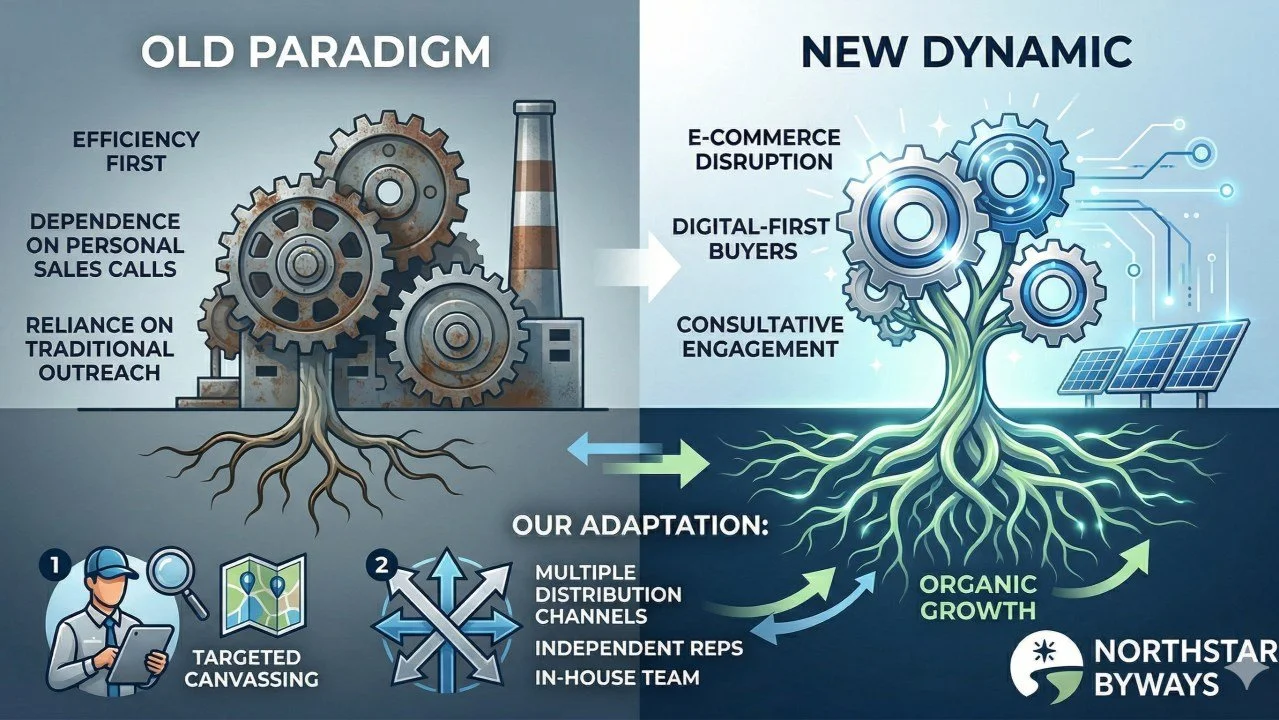
Is your craftsmanship hiding behind a broken sales model?
Northstar Byways LLC helps Midwest Manufactuters regenerate growth through various pathways
One of the greatest challenges for the privately held manufacturer is translating operational excellence into organic growth. We’ve spent decades fine-tuning efficiency and craftsmanship, yet many find it difficult to engage new customers in an evolving market.
The sales landscape has fundamentally shifted. E-commerce and a new generation of buyers, who prefer to self-serve rather than entertain personal sales calls, are disrupting traditional methods. For the niche manufacturer, whose products often require consultative dialogue, this "new dynamic" creates substantial obstacles to gaining that next dollar of incremental revenue.
The solution isn't to stop manufacturing but to change how we connect. We must adapt:
Laser-Focused Outreach: Transition from passive leads to structured, disciplined canvassing by your field sales team.
Expanded Channels, Unified Goals: Diversify distribution. Whether utilizing an in-house team, independent reps, or both, align their incentives to cooperate on growth, not compete.
Efficiency built your business. Your sales engine must now be engineered with the same precision.
How has your manufacturing sales strategy evolved to meet the new digital buyer?
#Manufacturing #OrganicGrowth #SalesTransformation #ThoughtLeadership #B2BSales #NorthstarByways